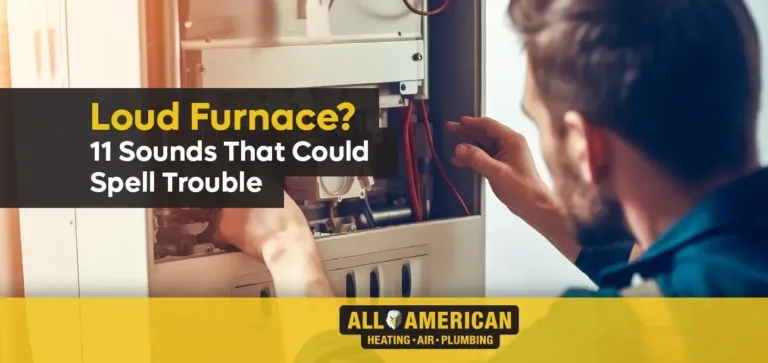
If you’re wondering, “Why is my furnace so loud all of a sudden?” — you’re not alone. The good news? Most furnace noises have simple explanations.
The better news? Many can be fixed before they cause major damage.
Let’s break down what those sounds mean and how to get your peace (and quiet) back.
Quick Takeaways
- Loud furnace noises usually point to wear, dirt buildup, or airflow issues.
- Certain sounds — like banging or whistling — can signal serious risks.
- Regular maintenance keeps your furnace quiet and extends its lifespan.
- Shut the system off immediately if you suspect gas or electrical issues.
- Contact a qualified HVAC technician for persistent or dangerous noises.
What Causes a Furnace to Be So Loud?
 Your furnace should run quietly, with only a soft hum or gentle whoosh of air. But when that turns into banging, buzzing, or whistling, something inside isn’t working the way it should.
The most common culprits are loose parts, clogged filters, dirty burners, or electrical problems. Over time, normal wear and tear can cause screws to loosen, filters to clog, and fan motors to strain.
Sometimes, airflow restrictions in your ductwork or cracks in the heat exchanger amplify the noise even more.
In other words — furnaces aren’t supposed to be loud. If yours is, it’s time to listen closely.
Types of Furnace Noises and What They Mean
Different sounds tell different stories. Here’s a guide to 11 furnace noises you might hear and what each one could mean.
1. Banging or Popping Sounds
If your furnace sounds like popcorn popping or metal slamming, the problem is often dirty burners or a delayed ignition.
When gas builds up before ignition, it creates a small explosion inside the combustion chamber, causing that loud bang. In some cases, expanding ductwork can also pop as it heats up.
Fix: Clean the burners, check for gas leaks, and tighten loose duct joints. If you smell gas or the banging is frequent, shut the furnace off immediately and call a professional — this could indicate a fire hazard.
2. Whistling or Hissing
A furnace that whistles like a tea kettle might have a clogged air filter or leaky ductwork. Sometimes, that whistling is the sound of air struggling to get through restricted pathways.
But a hissing sound near the furnace itself can be more serious — it might point to a gas leak.
Fix: Replace your air filter and inspect duct joints for leaks. If the noise continues or you notice a sulfur smell, shut off the gas and call a licensed HVAC technician right away.
3. Rattling or Vibrating
That rattling noise you hear when your furnace kicks on? It’s often from loose screws, motor mounts, or panels shaking during operation.
If the rattling doesn’t go away after tightening things up, the problem might be deeper — possibly a cracked heat exchanger, which can leak dangerous gases into your home.
Fix: Tighten visible parts and schedule a professional inspection if the noise continues. Persistent rattling is never something to ignore.
4. Humming or Buzzing
A low hum from your furnace is normal. But a loud or persistent buzzing could mean electrical issues, a faulty capacitor, or loose wiring.
If the sound gets worse when the furnace turns on, it’s likely coming from the blower motor or electrical components.
Fix: Turn off power to the unit and have an HVAC technician check for short circuits or electrical arcing. These can pose serious safety risks if left unresolved.
5. Squealing or Screeching
High-pitched squeals often point to worn-out belts, shaft bearings, or a misaligned blower wheel. Think of it as your furnace crying out for a tune-up.
Fix: Lubricate moving parts, adjust the blower wheel, or replace the belt. If you hear this sound right after startup, don’t ignore it — it usually worsens with time.
6. Clicking Noises
Hearing a rapid clicking noise? That’s usually tied to the ignition system or pilot light. When the furnace tries (and fails) to ignite, it clicks repeatedly.
Fix: Clean the ignition sensor or pilot assembly. If the furnace clicks but doesn’t produce heat, call a professional — the ignitor might be failing.
7. Knocking or Clunking
A repetitive knock, knock, knock sound could come from loose components, dirty burners, or unstable gas flow.
Fix: Have a technician clean and inspect the burners, tighten internal parts, and check gas pressure. Left untreated, these issues can lead to further damage or system failure.
8. Rumbling or Roaring
If your furnace sounds like a small engine, it might have dirty burners or heat exchanger problems. A damaged heat exchanger can lead to a carbon monoxide leak, which is extremely dangerous.
Fix: Shut the furnace off immediately and call a professional. Do not operate the system until it’s inspected.
9. High-Pitched Screaming
This one’s hard to ignore — a furnace that screams is in distress. The cause is often air pressure issues or a blocked ventilation system.
Fix: Replace dirty filters, clear air vents, and inspect your ventilation system for obstructions. Persistent screaming means there’s a safety risk that needs urgent attention.
10. Vibrating Metal or Duct Noise
A loud metal rattle or booming vibration through the walls usually comes from loose ductwork or unsealed joints.
Fix: Secure ducts, add insulation, and ensure the airflow is balanced. A quick inspection can often stop this noise fast.
11. Furnace Making Noise When Off
If your furnace makes noise even when it’s off, you might have a malfunctioning gas valve or electrical relay that isn’t shutting down properly.
Fix: Turn off both the power and gas supply, then call a licensed technician. Running the furnace in this state can be dangerous.
Is a Loud Furnace Dangerous?
Not every furnace noise is a sign of danger — but some are.
Sounds that involve gas leaks, electrical buzzing, or rumbling heat exchangers require immediate attention. A cracked heat exchanger can release carbon monoxide, a silent but deadly gas.
If you ever suspect a gas leak, shut off your system, ventilate your home, and call emergency services before contacting an HVAC professional.
Safety tip: Install carbon monoxide detectors near your furnace and in sleeping areas to stay protected.
How to Fix a Noisy Furnace (Step-by-Step)
 If your furnace is making noise but still running, here’s what you can do safely:
- Turn off power and gas supply.
Always start here — safety first. - Check and replace the air filter.
Dirty filters restrict airflow, causing whistling and overheating. - Tighten loose screws, panels, or duct joints.
A simple screwdriver can solve half of all furnace noises. - Clean burners and blower assembly.
Dust and grime buildup make your furnace work harder (and louder). - Schedule a professional inspection if noise continues.
Some issues — like ignition failure or a cracked heat exchanger — need expert care.
Prevent Furnace Noise Before It Starts
The best way to deal with furnace noise? Prevent it.
Schedule regular maintenance at least once a year. Replace filters every 1–3 months. Keep vents clear and ducts sealed. Clean burners before the heating season.
Doing so not only keeps your furnace quiet but also improves energy efficiency, lowers heating bills, and helps your system last longer.
Don’t Ignore the Noise — Fix It Fast
 A noisy furnace isn’t just an annoyance — it’s your heating system trying to tell you something. Whether it’s a loose screw or a potential gas leak, acting early can save you money and keep your family safe.
If your furnace is loud, rumbling, or whistling, don’t wait for it to get worse. Call All American Heating, Air, & Plumbing for expert furnace repair in Raleigh, NC and nearby areas. Our licensed HVAC technicians can inspect your system, pinpoint the problem, and get your home feeling warm and quiet again fast.
Keep your furnace running smoothly and safely — so the only sound you’ll hear this winter is the comfort of home.